Not Just Fishing's Fish Finders
Fishing Articles and Information

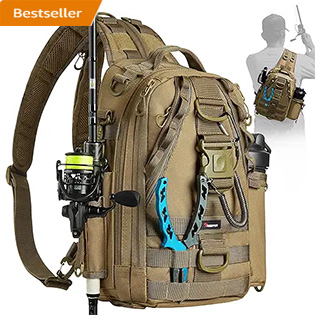
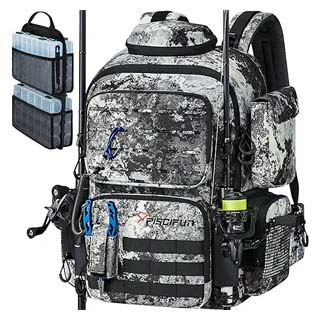
Piscifun Fishing Tackle Backpack
with Rod & Gear Holder
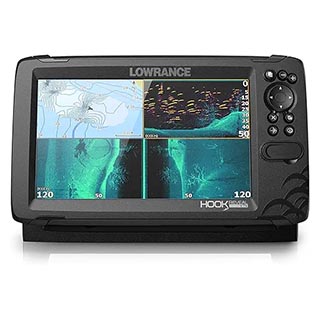
Lowrance Hook Reveal 9 Fish Finders
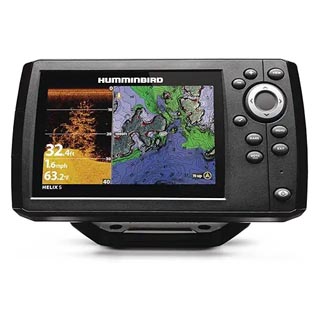
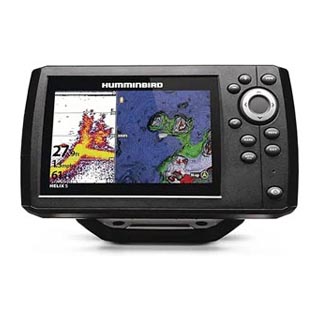
Humminbird 411670-1 Helix 5 Chirp DI GPS G3 Fish Finder
About This Item
* Keypad control: Master HELIX at the touch of a button. Access the pre-loaded views from the user-friendly menu system, operated by softkey controls that allow you to reliably operate your fish finder in any conditions.
* Dual Spectrum CHIRP sonar: Before you cast, know what's down there thanks to highly-detailed fish arches and a clear view of fish-holding structure and the bottom.
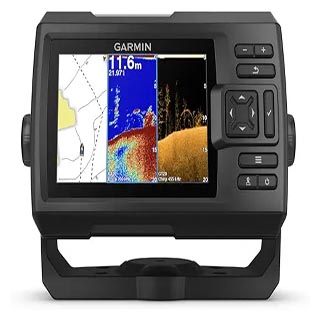
Garmin 010-01872-00 STRIKER 5CV with Transducer, 5" GPS Fishfinder
Spinning Versus Fly Fishing
By Jon A Lutz
Whether you are a seasoned, professional fisherman, or just getting started, or somewhere in between, do you ever wonder what the differences are between Spinning versus Fly Fishing?
We will explain what these differences are in terms of Rods, Reels, Bait, Lines, and more.
Don't be confused any longer,
but know these differences, so you can see whether you like Spinning Fishing, Fly Fishing, or maybe you, as a long time fisherman or
just a beginner or somewhere in the middle of these two, can try both and catch more and bigger fish than you've ever caught in your
life.
Now, let's get to the differences between Spinning Fishing and Fly Fishing.
First of all, in terms of Rods, in Spinning Fishing a fisherman typically a 6 1/2 foot spin rod and an ultralight spin reel that has about 200 yards of level 6 pound test monofilament line. The lure (or bait) is tied directly onto this line.
The casting of this line would be done with a fisherman holding the spinning rod at about a 10:00 position in front of him, and then he uses his wrist to bring the tip of the rod back to the 12:30 position; then, with a snap of his (or her) wrist, the rod would quickly be brought back to the 10:00 position.
At the same time, he straightens his index finger, which has been crooked around the line. The flex of the rod snaps the lure (or bait) off into space, pulling the line smoothly off the reel.
The lure's (or bait) trajectory (or flight) is slowed by air resistance
and gravity, about sixty feet away, and it hits the water with a gentle splat. The fisherman (or woman) then retrieves his (or her)
line and brings the lure (or bait) back into shore or into a boat and turning a crank on the side of the reel; a mechanical bail gathers
the line back onto the reel spool, moving the lure (or bait) through the water with a minnowlike wobble (a minnow is a small type of
fish).
When the lure (or bait) reaches the boat or shore, he (or she) reels in more line until the lure or bait is hanging
a few inches below the tip of the rod. Then the fisherman (or fisherwoman) is ready to cast again.
The fly fisherman's objective
is the same as the spinning fisherman, but both his lure (or bait) and tackle (rod, fishing line, reel, and more) are quite different
than spinning fishing. The lure is made up of a hook dressed with tinsel and feathers (that may look like a real fly, insect, or other
type of real live bait, but is actually an artificial imitation of any of these baits just listed).
The tinsel is wound
around the straight part of the hook, forming a shiny "body" that reflects light in imitation of a minnow's silvery scales.
The "wing" of the fly is made up of two chicken feathers. These feathers have black centers with white edges, and are an
impressionistic view of a minnow's black medial stripe. This is called a Streamer Fly, and it would take a couple dozen of them to
equal the weight of the spin fisherman's balsa wood version.
A fly has virtually no weight, so it lacks the momentum necessary to draw line off of the front of the spinning reel. Even if you take a fly in your hand and heave it as far as you can, it will barely reach effective fishing distance. You can always hang the fly off the end of your spinning rod, as the primitive ancestors of ours did with their fishing tackle, but there are more efficient ways to present a fly.
The fly fisherman (or fisherwoman) relies
on a weighted line to deliver his fly, rather than a long, level piece of nylon, like the spinning fisherman. This line may float or
sink once it hits the water, but it has enough weight to deliver the fly over a hundred feet away (although the average cast is more
like thirty feet, or much less than one hundred feet).
The thick fly line is separated from the fly by a leader of tapered
nylon monofilament, which is basically the same material the spin fisherman's entire fishing line is made of. The leader gives a flexible,
almost invisible connection between the fly line and the fly.
Here's a description of a fly fisherman in action. He (or she)
ties the fly to his leader, then pulls ten feet of fly line out beyond the tip of his (or her) fly rod. After this, he (or she) pulls
thirty feet of fly line off the reel and holds it, coiled, in his left hand.
Then with a quick back-and-forth flicking
motion, using his right forearm and wrist, he moves the tip of the fly rod from straight out in front of him to just past the vertical.
So when the fly line moves through the air, it looks like a tight, elongated arc. As the fly line moves in this tight, elongated arc,
it eventually flattens out, parallel to the water, both behind and in front of the fisherman.
The fisherman does this three
or four times, not letting the fly or line hit the water, and releases some of the coiled fly line in his left hand every time he finishes
a forward stroke of the flicking motion. When he (or she) finishes the fourth "false cast" as they are called, his fly, leader,
and line settle gently to the water, forty feet away.
Then the Streamer, a type of wet fly, sinks slowly below the surface of
the water, pulling the leader along. The fisherman (or fisherwoman) then begins to retrieve the line, moving the fly through the water
instead of using his reel to retrieve the line, as the spin fisherman does, and then he (or she) hooks the fly line over the index
finger of the hand that is holding the rod and pulls the fly line with his other hand.
By doing this, each pull of the
line makes the fly dart through the water like a minnow (a type of small fish). And then each length of line is carefully coiled in
the fisherman's left hand, ready to be worked out on the next cast. When the fly is about ten feet from the boat (or shore), the fisherman
(or woman) will start another cast, repeating this process again.
As described above, it looks like the fly fisherman has to
go through a lot of effort to make one single cast. The spin fisherman (or fisherwoman) only has to flick the tip of his or her rod
once to deliver the lure (or bait) to the water, while the fly fisherman has to move his or her rod a few times before his fly reaches
an effective fishing distance.
However, fly fishing has its advantages over spin fishing. One advantage is that if a fly
fisherman suddenly sees a feeding fish, he or she can pick up the entire forty foot length of line, change the direction of his cast
in midair, and lay it down right in front of the fish. On the other hand, a spin fisherman must reel in all his fishing line before
he can even think about making a cast to another spot. And there are other advantages.
Fly fishing may be the most enjoyable way to fish for trout, but it is not always the most efficient. For instance, in early spring, when the water is cold, the trout are not inclined to move for a drifting fly. A worm put right in front of their noses is much more appealing.
The source for all of the above information is found in Chapter One of the Orvis Fly Fishing Guide, located at: Orvis Fly Fishing Guide Chapter One. You can also read other chapter excerpts from this Orvis Fly Fishing Guide at Orvis Fly Fishing Guide Chapter Excerpts. Or you can call your nearest Orvis Outdoor Store, or Order this booklet online at Order Orvis Fly Fishing Guide Old Edition.
Fishing Article Of Interest: How To Rig Synthetic Bait